

Quick answer: choose the size first, then the voltage, then the price per kilowatt-hour. The badge on the case is the last decision, not the first. Our shelf carries six lithium batteries in two formats: two 12-volt units under ₦300,000 for small backup — the Cworth 12V Lithium Battery at ₦260,000 and the Sukam 12.8V Lithium Battery at ₦265,000 — and four 48-volt cabinets from 10 kWh to 30 kWh for a whole home or a business: the SMS 10KWH, the Felicity 10kWh, the Felicity 15KWH and the Haisic 30KWH. Every one of them carries a 5-year manufacturer warranty. The right battery is the one your load list says you need. The wrong one is any size bought from a guess.
Every figure below was read off the live product pages on 19 October 2026, and the method behind each figure is shown so you can check it yourself. Supply moves prices, so treat the product page as the live number and ask us to confirm it in writing before you pay.
Buyers ask this as a brand question. It is really a size question.
“Which lithium battery should I buy — Sukam, Cworth, Felicity, Haisic or SMS?” is how the question usually arrives. Answering it directly is the fastest way to buy the wrong thing, because the brand is the last of four decisions and the other three are the ones that cost you money if you get them wrong:
- How much energy do you need to carry through the night? That is kilowatt-hours, and it comes from your own appliances, not from a round number on a box. Our battery bank sizing guide works the arithmetic with your load list.
- What voltage is your inverter’s battery bank? 12 V, 24 V or 48 V. The battery and the inverter must agree, and the battery’s rating decides which inverter you can buy. See the 24V vs 48V guide.
- How many years do you expect to keep it? All six batteries below carry a 5-year manufacturer warranty; what that warranty covers and what it excludes is written on our warranty and guarantee page.
- Then the badge. With the first three settled, the difference between these brands is price per unit of usable energy, lead time and who answers the phone when you need service. That is a much smaller decision than it looks from the shop counter.
One more thing decides more outcomes than any brand name: chemistry. Lithium gives you roughly 85% of the rated capacity as usable energy against about 50% for an equivalent lead-acid battery, needs no topping up, and lasts several times longer. If you are still weighing lithium against lead-acid, read the lithium versus lead-acid comparison first. This guide assumes you have taken the lithium route.
The six batteries on our shelf, compared
| Battery | What its page publishes today | Price read 19 Oct 2026 |
|---|---|---|
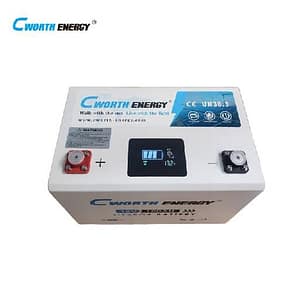
| Cworth 12V Lithium Battery | 12 V single unit. Product photography is captioned 100 Ah. Manufacturer warranty: 5 years. | ₦260,000 (was ₦270,000) |
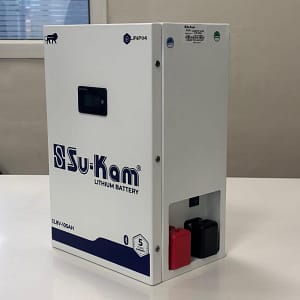
| Sukam 12.8V Lithium Battery | 12.8 V single unit, named on its own page. Amp-hours are not published on the page. Manufacturer warranty: 5 years. | ₦265,000 (was ₦270,000) |
| SMS 10KWH Lithium Battery | Rated 51.2 V (the 48 V class), 200 Ah, 10,240 Wh. Manufacturer warranty: 5 years. | ₦1,900,000 (was ₦1,950,000) |
| Felicity 10kwh Lithium Battery | Rated 51.2 V, 200 Ah, 10,240 Wh, from the Felicity Solar LPBF48200-H datasheet. Manufacturer warranty: 5 years. | ₦2,000,000 |
| Felicity 15KWH Lithium Battery | Rated 51.2 V, 300 Ah, 15,360 Wh, Felicity 48 V 300 Ah platform. Manufacturer warranty: 5 years. | On the product page |
| 30KWH Haisic Lithium Battery | Rated 51.2 V, 600 Ah, 30,720 Wh; cycle life over 6,000 cycles at 0.5C, 25°C, 80% depth of discharge. Manufacturer warranty: 5 years. | On the product page |
Two of the six prices are deliberately not printed here. A guide that quotes a shelf price becomes wrong on the day the shelf moves, and a reader who arrives to argue about a figure has stopped learning anything from the page. Open the product page for today’s number, then run the sum in the next section on it before you decide.
The two formats, and why the format is decided before the brand
The 12-volt units: Cworth and Sukam
These are single batteries in the 12 V class — the Sukam page names 12.8 V, which is the nominal figure for this class of lithium cell. They are built for a flat, a single room, a small shop, or a backup installation covering lights, a television, a router and phone charging, and they are the natural building block when several units are combined into a larger bank.
Two cautions apply to this format and neither of them is about the brand. First, if you are buying more than one unit to wire together, get the manufacturer’s series and parallel limits in writing before you pay — that is a safety matter, not a preference. Second, mislabelled lithium capacity is common in this market; a quick weight check and one cell-specification question catch almost all of them, and our lithium versus lead-acid guide shows how the check works.
The 48-volt cabinets: SMS, Felicity and Haisic
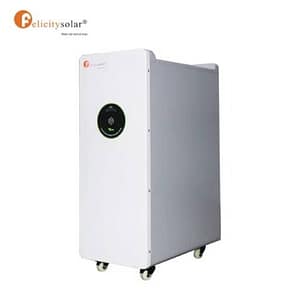
These are floor-standing cabinets rated at 51.2 V, which is the 48 V class, from 10 kWh up to 30 kWh. They are sized for a family home that wants to carry the night without a generator, or for a small commercial load. Ten kilowatt-hours pairs naturally with a 3–5 kW inverter and a 3–4 kWp array; that is the standard configuration for a Nigerian home running a fridge, a freezer, a washing machine, the television and a water pump.
The rating on the cabinet decides the inverter, and not the other way round. A 51.2 V bank needs a 48 V inverter and cannot be run on a 12 V or 24 V one. If you already own an inverter, match to it. If you are buying both, buy them as a pair from the same quote — a quote that avoids the bank voltage is not a quote, it is a price.
How to compare any two batteries in ten seconds
Three sums settle a comparison faster than any feature list.
1. Naira per kilowatt-hour
Divide the price by the rated energy, not by the rounded number in the product name. Worked with the figures on the page today: the SMS at ₦1,900,000 divided by 10.24 kWh is about ₦186,000 per kWh, and the Felicity 10 kWh at ₦2,000,000 divided by 10.24 kWh is about ₦195,000 per kWh. Run the same sum on whichever two cabinets you are choosing between. Where one figure per kWh is dramatically lower than another on the same shelf, ask us why before you pay — you deserve an answer in writing, and a straight answer is part of what you are buying.
2. Naira per amp-hour, for the two small units
The same idea in the units these batteries are sold in. The Cworth at ₦260,000 for the 100 Ah shown in its own product photography is ₦2,600 per Ah. The Sukam page does not publish amp-hours at all, so a price with no capacity behind it is not yet a comparison — ask for the capacity before you compare, and do not accept “it is the same size” as an answer.
3. Usable energy, not labelled energy
Lithium gives you roughly 85% of rated capacity as usable energy against about 50% for lead-acid, so read a capacity figure as energy you can actually take out of it. Depth of discharge and the inverter’s own losses take a further slice. Plan on the usable figure when you are working out whether the lights stay on until morning, and never on the number printed on the box.
What each one is for
- Cworth 12V — smaller backup and off-grid work where the load does not justify a 48 V bank: a flat, a single room, a small shop. ₦260,000 today.
- Sukam 12.8V — the same class of job from a long-established name in Nigerian power systems: lights, fans, a television, a router and short-outage backup, or a building block in a combined bank. ₦265,000 today.
- SMS 10 kWh — a larger home system or a small commercial load: the family evening with fridge, freezer, washing machine, television and pump.
- Felicity 10 kWh — whole-home off-grid and backup storage for a household that wants to carry the night without a generator, with the rated specification named from the manufacturer’s own datasheet.
- Felicity 15 kWh — substantial loads or genuine multi-day autonomy. It is also the capacity at which the battery bank starts to dominate the cost of the system, which is exactly why the sizing has to be right before the money moves.
- Haisic 30 kWh — a large whole-home system or a small commercial site, with parallel expansion for loads that will grow, and a published cycle life above 6,000 cycles at 0.5C, 25°C and 80% depth of discharge.
Six checks before you pay anyone, including us
- Rated voltage, in writing. The bank voltage and the inverter voltage must both appear on the quote and must agree with each other.
- Rated capacity and its source. Ask for amp-hours and nominal voltage, and for the datasheet or model name behind them. Our product pages name the source where the manufacturer publishes one.
- Warranty in writing. All six batteries carry a 5-year manufacturer warranty. Read what is covered and what is not on the warranty page before you pay, not after.
- Delivery terms before any deposit. We deliver within 12 hours in Ilorin and within 48 hours anywhere else in Nigeria, and we agree the date with you on WhatsApp before dispatch on orders over ₦400,000 or any full kit. The same terms are written on the delivery page, and they should be written into any seller’s quote.
- Series and parallel limits if you are buying more than one unit to combine, confirmed by the manufacturer rather than by the person at the counter.
- The price on the day. Confirm the figure in writing before you pay. Prices move with supply, and a guide, any guide, is always a photograph of a shelf.
What happens next
If you already have a load list, send it. If you do not, list the appliances you want to run and roughly for how long, and use the request a quote page to tell us your budget. You get a written quote naming every line, with the bank voltage, the capacity and the warranty on it, and no obligation to continue. If you would rather talk it through, use the WhatsApp button in the shop box below this guide — it opens a chat with this article’s title already written into the message, so you do not have to explain which guide you read.
If you are still at the stage of working out the size rather than the brand, start with what to buy first with ₦500,000 for the order to buy in, the complete sizing guide for the arithmetic, and the 3.5 kVA versus 5 kVA guide for choosing the inverter that the battery has to feed.
Prices and rated specifications were read off our live product pages on 19 October 2026, and every product named above links to its own page, where the current figure lives. Two cabinet prices are shown on their product pages rather than reprinted here, for the reason given above.
Shop the products in this guide
- Sukam 12.8V Lithium Battery
- Cworth 12V Lithium Battery
- Felicity 15KWH Lithium Battery
- Felicity 10kwh Lithium Battery
- 30KWH Haisic Lithium Battery
- SMS 10KWH Lithium Battery
Prices are on each product page. Not sure which one you need?
Pay today and we deliver within 12 hours in Ilorin, or within 48 hours anywhere else in Nigeria. On orders over ₦400,000 or any full kit, we agree the date with you on WhatsApp before we dispatch.
Ask us on WhatsApp about “Which Lithium Battery Should You Buy in Nigeria? Sukam,…”
0 Comments