

Quick answer: with ₦500,000 today, buy the two pieces you cannot add later at the same price: the inverter and the battery. The 1.3 kW 12V Kartel Hybrid Inverter at ₦210,000 plus one Cworth 12V Lithium Battery at ₦260,000 is ₦470,000 for the pair. Add the 700W Solar Panel at ₦147,000 next, and the full three-piece starter is ₦617,000. The panel is the cheapest piece to add later. The battery and the inverter are the pieces you do not want to buy twice.
Every naira in this article was read off our live product pages today, 12 October 2026. Prices move with supply, so check the product page before you pay. Every number below has a method behind it, and the method is shown so you can check the arithmetic yourself.
The question this guide answers
“I have ₦500,000. What do I buy first?” It is the most common question a first-time buyer asks, and it is the right question, because the order you buy solar hardware in decides whether your money compounds or evaporates. Buy the wrong piece first and you will be replacing it within a year.
There is also a version of this question that should worry you: a quote selling a complete solar system for under ₦500,000 with no itemised list. That quote is either cutting something you cannot see, or it is not a complete system. This guide is the itemised list, so you can put any quote beside it and check line by line.
What ₦500,000 buys on our shelf today
We stock two inverter families, four large battery cabinets, two 12V batteries and one panel. For a starter budget, three items matter.
- Kartel Hybrid Inverter — five plate sizes, from ₦210,000. The starter size is the 1.3 kW 12V at ₦210,000, reduced from ₦230,000. It is a true hybrid: it charges the battery from the grid or a generator, then switches to the battery when the light goes. Manufacturer warranty 5 years.
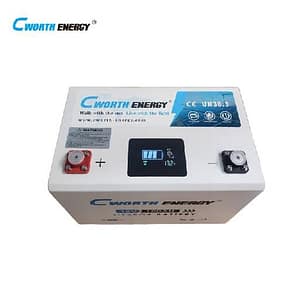
- Cworth 12V Lithium Battery at ₦260,000, reduced from ₦270,000. The page shows 100 Ah in its photograph caption; what that stores in kilowatt-hours is worked out below. Manufacturer warranty 5 years.
- 700W Solar Panel at ₦147,000, reduced from ₦167,000. This is the piece to buy second, for the reason in the next section.
Inverter plus battery: ₦470,000. Inverter, battery and one panel: ₦617,000. Installation and cabling are quoted for your site, and your quote names every line.
Why the inverter and the battery come before the panel
A panel with no battery is only useful while the sun is shining, and in Nigeria the need is greatest in the evening. A battery with no panel still works, because a hybrid inverter charges the battery from the grid or your generator and shifts that energy to the hours you choose. So a starter system works from day one on grid charging, and the panel arrives later to cut your fuel bill.
That order also matches how the hardware is priced. Panels are modular: you can add another 700W panel any month and it simply joins the array. The battery bank is less forgiving of being undersized, and the inverter’s bank voltage decides which batteries it can even accept. Buy the core correctly first.
Be clear about what this starter is: an evening backup system, not whole-home independence. It keeps the lights, the television, the fans, the router and your phones running through the evening, on the energy you put into it during the day. The appliances it cannot carry are named further down, with the arithmetic.
What one Cworth 12V battery actually stores
The method is one line: amp-hours × nominal volts ÷ 1000 = kilowatt-hours.
The Cworth page shows 100 Ah in the photograph caption. At the standard 12.8 V nominal for this class of lithium battery, that is 100 × 12.8 ÷ 1000 ≈ 1.28 kWh. Call it 1.2 kWh to be safe, because nominal figures move a little between batches.
Lithium gives you roughly 85% of that as usable energy, so about 1.1 kWh, and the inverter loses a small slice converting to 220V. Plan on roughly 1 kWh of evening use. In a Nigerian flat, that is about:
- Six LED bulbs at 9W for six hours — 324 Wh
- A television at 80W for four hours — 320 Wh
- A standing fan at 60W for five hours — 300 Wh
- A router and phone charging for the evening — about 50 Wh
That is about 1 kWh, which is exactly one evening on one Cworth. So the honest answer: lights, television, a fan, the router and your phones — yes. The fridge, the freezer and the air conditioner all night — no. Those need a bank several times this size. Our battery bank sizing guide works through the full arithmetic with your own appliances.
What a kilowatt-hour is, and why it is the only number that matters
A kilowatt-hour is one kilowatt of load running for one hour. Run a 1,000W appliance for one hour and you have spent 1 kWh. Run a 100W appliance for ten hours and you have also spent 1 kWh. Your utility bill is denominated in the same unit, which is why it is the number that translates directly into money.
The trap in the market is that batteries are sold by adjectives and inverters are sold by kVA. Neither tells you what the system stores. The stored energy is the battery’s amp-hours times its volts. The speed limit is the inverter’s continuous watt rating. When someone quotes you a “big” system, ask for those two numbers — kWh of storage and watts of continuous output — and the adjectives disappear.
If you take one habit from this guide, take that one: price divided by kWh to compare storage, price divided by watts to compare inverters. The ratios keep working even when prices change.
The mistake that makes cheap starters fail: a voltage mismatch
The Kartel comes in 12V, 24V and 48V bank voltages, and the battery bank must match the inverter exactly. The 1.3 kW size is 12V and runs on one 12V battery. The 2.3 kW size at ₦230,000 is 24V and needs two 12V batteries in series, which is ₦520,000 of Cworth before you add the inverter. A 24V inverter with one 12V battery is not a weak system; it is a system that will not start.
So when a quote offers you a 24V inverter and one battery for a starter price, ask what bank voltage the inverter expects. If the answer is 24V, the quote is short one battery — or short the truth. This is also why we confirm the rated bank voltage in writing before you pay, and it is one of the three checks at the end of this guide.
What ₦500,000 does not buy
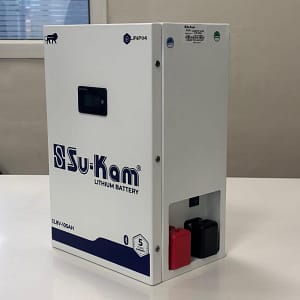
- Not the fridge and freezer all night. A fridge running at 100W for ten hours is about 1 kWh on its own — the entire starter battery, spent on one appliance. Carrying cold appliances overnight is where the SMS 10KWH Lithium Battery at ₦1,900,000 enters the conversation. That is a different budget, and it is a real price, not a scare figure.
- Not air conditioning. A 1.5HP air conditioner draws about 1 kW or more while running; a full night of it is several starter batteries’ worth of storage. If cooling is the goal, start from the air conditioner sizing guide, not from a starter budget.
- Not a whole-home system. Five kVA-class builds use a bigger inverter, several batteries and a full panel array; the 3.5 kVA vs 5 kVA guide shows how those builds are priced. The starter is step one, not a compressed copy of a bigger system.
None of that is bad news. Most people who jump straight to the big system are buying from a guess. You are buying from a plan, and the plan can grow with what you learn.
The order I would buy in
- Step 1 — the pair (₦470,000). The 1.3 kW 12V Kartel Hybrid Inverter and one Cworth 12V Lithium Battery. Lights, television, fan, router and phones through the evening, charged from the grid during the day.
- Step 2 — one panel (₦147,000). The 700W Solar Panel. The sun starts paying for the system and your generator hours drop. In our experience panel output in Nigerian conditions is best planned at 70 to 80 per cent of the nameplate figure after dust, heat and shading, so treat 700W as about 500W of real daytime charging into the battery.
- Step 3 — a second Cworth (₦260,000). A second 12V unit roughly doubles the evening capacity. Before you wire two batteries together, get the manufacturer’s series and parallel limits in writing from any seller — that is a safety matter, not a preference. We confirm it with you before you pay.
- Step 4 — upgrade when your load outgrows 1.3 kW. The next honest step is a 24V system: the 2.3 kW or 4.3 kW 24V Kartel (₦230,000 and ₦393,000 today) with two batteries. By that point you will have measured your real load, and you will be buying the second system from data instead of guessing.
Notice what is not in the list: nothing is thrown away. The panel carries into any future array. Whether the batteries carry into the 24V upgrade depends on the manufacturer’s series rules, and we will confirm that in writing before you buy so there are no surprises later.
Three checks before you pay anyone, including us
- Written specifications. Ask for the battery’s amp-hour rating and nominal voltage, and the inverter’s continuous rating in watts, in writing before payment. Our product pages state these where the manufacturer publishes them, and the full specification is confirmed to you in writing before you pay on every item in the shop.
- One voltage on the whole quote. The inverter’s bank voltage and the battery’s voltage must appear on the quote and must agree. A quote that avoids both numbers is not a quote, it is a price.
- Warranty and delivery in writing. Both products in the starter carry a 5-year manufacturer warranty; the warranty and guarantee page says what is covered. Read the delivery terms before you pay a deposit anywhere, including with us.
What happens next
Send us your load list — the appliances you actually want to run, and roughly for how long — or use the request a quote page and tell us your budget. We will send a written quote with every line named, no obligation. If you would rather talk it through, use the WhatsApp button in the shop box below this guide; it opens a chat with this article’s title already in the message, so you do not have to explain which guide you read.
Pay today and we deliver within 12 hours in Ilorin, or within 48 hours anywhere else in Nigeria. On orders over ₦400,000 or any full kit, we agree the date with you on WhatsApp before we dispatch — read the delivery terms.
Prices are what we charge today, read off our live shop pages on 12 October 2026, and they change with supply. Every product named above links to its page.
Shop the products in this guide
Prices are on each product page. Not sure which one you need?
Pay today and we deliver within 12 hours in Ilorin, or within 48 hours anywhere else in Nigeria. On orders over ₦400,000 or any full kit, we agree the date with you on WhatsApp before we dispatch.
Ask us on WhatsApp about “What to Buy First With ₦500,000: A Starter Solar…”
0 Comments